Crystallization or Sealing: Which Protects Your Marble Better?
Crystallization or sealing: which does your marble need? People often treat the two as the same thing, but they do different jobs. One works on the surface of the stone, and the other works inside its pores. Knowing the difference helps you pay for the protection your floor actually needs.
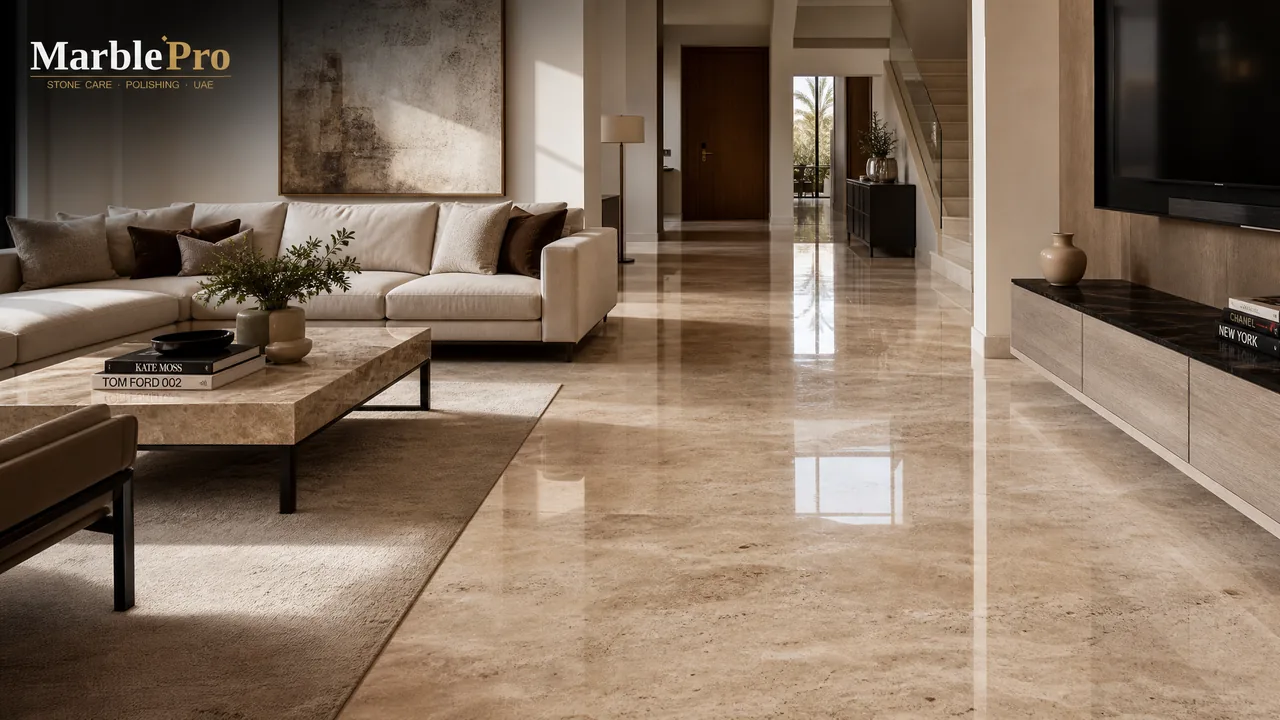
What crystallization does
Crystallization uses a chemical treatment and a floor machine to change the top of the stone. The product reacts with the calcium in marble and forms a harder, glossier surface. It suits floors that need more shine and that take regular foot traffic.
It only works on calcium-based stone, such as marble, limestone and terrazzo with marble chips. It will not work on granite or quartz.
What sealing does
An impregnating sealer soaks into the stone and fills its tiny pores. It does not add much shine, and you often cannot see it at all. Its job is to slow down water, oil and other spills so that you have time to wipe them up.
Sealing suits kitchens, bathrooms and dining areas, where stains are the main risk.
How they compare
| Crystallization | Sealing |
|---|---|
| Works on the surface | Works inside the pores |
| Adds hardness and gloss | Slows stains |
| Suits calcium-based stone | Suits most natural stone |
| Best on floors | Best on floors, tops and wet areas |
What neither one can do
No treatment makes marble maintenance-free.
- Acid can still mark the surface, so wipe up lemon and vinegar quickly.
- Sand can still scratch the floor, so you still need mats and dust-mopping.
- Neither one fixes deep scratches. The floor must be polished first.
Be careful with any company that promises a floor that never stains or never needs care.
Crystallization or sealing: which should you choose?
Think about what worries you most.
- If your floor looks dull and sees heavy use, crystallization may help after polishing.
- If you worry about stains in a kitchen or bathroom, choose a sealer.
- If you have a busy floor that also faces spills, you may need both.
- If you have granite, quartz or Corian, skip crystallization and ask about the right care for that surface.
In what order should the work happen?
Polish first, because both treatments protect the surface they find. Crystallizing or sealing a scratched floor only locks in the problem. Our crystallization and sealing service starts with a check of your stone, so you only pay for what the floor needs.
Questions to ask before you pay for either
Protection products vary, so ask what you are getting.
- Which product will you use, and is it made for my stone?
- Will you polish the floor first?
- Will you test a small area?
- How should I clean the floor afterwards?
- What will the finish look like?
A company that only offers one answer for every floor may be selling a product rather than solving your problem.
Where each treatment works best in a home
Different rooms have different needs.
- Hallways and living rooms: traffic is the main issue, so polishing and possibly crystallization make sense.
- Kitchens: oil and food stains matter most, so a good sealer is the priority.
- Bathrooms: water and soap are the main issues, so use a sealer made for wet areas.
- Stairs: wear shows on the front edge, and shiny treads can be slippery, so take care with the finish.
- Outdoor stone: choose a breathable sealer, and avoid a high gloss.
Common mistakes
- Sealing a floor that is still damp. It can trap moisture in the stone.
- Sealing over old wax. The product cannot reach the stone.
- Applying too much sealer. It can leave a sticky or streaky film.
- Using crystallization on the wrong stone. It may not work, and it can leave marks.
- Using acidic cleaners afterwards. They wear away the finish.
Looking after a protected floor
Protection lasts longer if you clean the right way. Dust-mop daily, use a pH-neutral cleaner and keep mats at the doors. A cleaning machine with a harsh pad can remove crystallization quickly, so tell your cleaning team what was done. Our guide on how often to polish marble floors can help you plan the next visit.
How do you know when to redo it?
Pour a little water on the stone and leave it for a few minutes. If the stone turns dark, the sealer has worn thin. For crystallization, look for dull paths where people walk most. Traffic and cleaning products decide how long each treatment lasts, so there is no fixed date.
Further reading: Calcium carbonate on Wikipedia.
Want an exact price for your floor?
Free on-site inspection, fixed-price quote and a 1-month written guarantee — across all 7 UAE emirates.
Frequently asked
Does crystallization make marble slippery?
It adds shine, but the surface is not necessarily more slippery when dry. Any polished stone can be slippery when wet, so keep floors dry and use mats near water.
Can I seal marble myself?
You can, but clean the stone well and follow the product label. Sealing over stains or dirt can trap them in the stone.
Can you crystallize granite?
No. Crystallization needs calcium in the stone, and granite does not have enough of it. Granite is polished with diamond pads instead.