How to Fix Scratched Marble Floors: A Homeowner's Guide
Marble floors are a striking feature in many homes across Dubai and the UAE, known for their natural beauty and cool elegance. Daily wear can leave marks; foot traffic, drops, or improper cleaning may cause scratches that dull the polished look. Homeowners often wonder whether the floor can regain its original luster. This guide explains the types of scratches that can appear on marble and offers clear, actionable steps to address them safely.
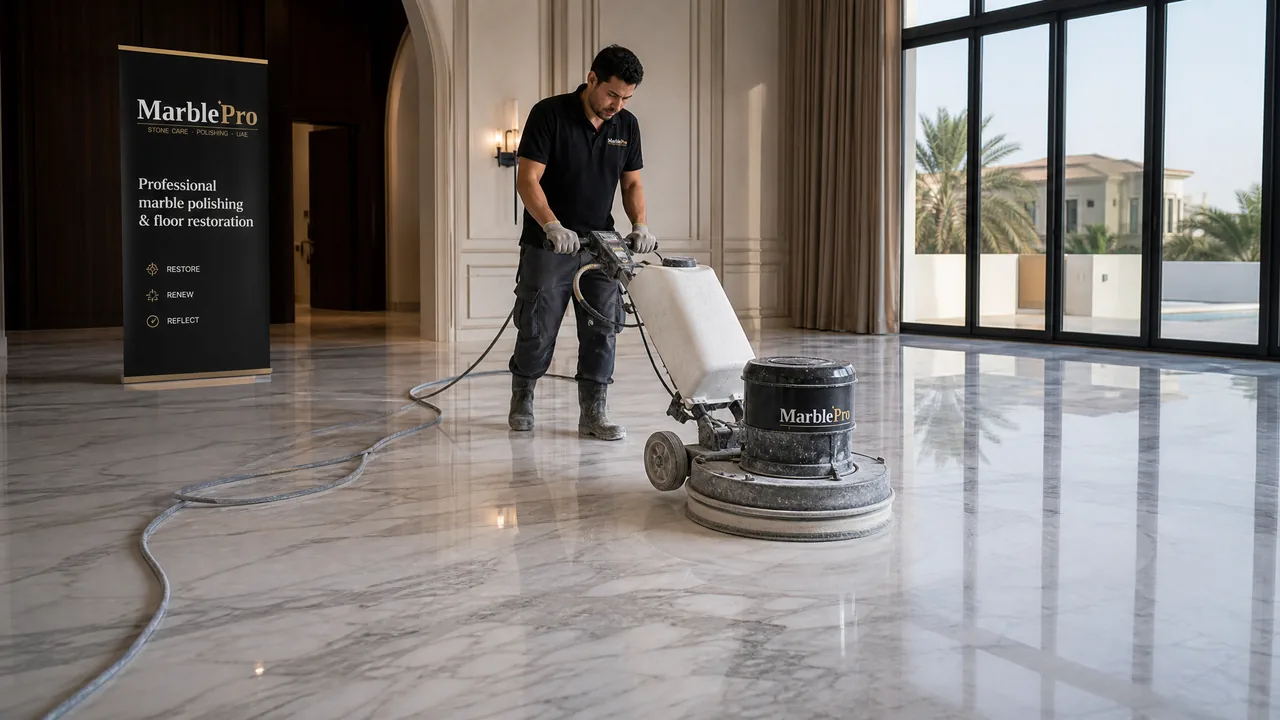
Understanding Scratches on Marble Floors
What Causes Marble Scratches
Marble floors, while beautiful, are susceptible to scratches. Common culprits include grit and sand tracked in from outside, which act like sandpaper underfoot. In Dubai and across the UAE, the prevalence of sand means this is a particular concern. Moving furniture without protection, dropping heavy objects, and even certain types of footwear can also mark the surface.
Different Kinds of Scratches
Scratches vary in their depth and impact on the stone.
- Hairline Scratches: These are very fine lines, often only visible in certain lighting. They typically affect the surface polish but do not penetrate deep into the stone.
- Superficial Scratches: A bit more noticeable than hairline marks, these are still relatively shallow. You might feel them slightly with a fingernail.
- Deep Gouges: These are clear indentations that have removed a significant amount of stone material. They are usually easy to see and feel. Deep gouges often require more involved repair methods.
DIY Steps for Light Scratches
Cleaning the Area First
Start by removing dust, grit and any loose debris. Sweep the floor with a soft, dry broom or use a vacuum fitted with a brush attachment. Follow with a damp microfiber cloth lightly moistened with plain water. Wipe the scratched spot in a circular motion, then dry the area thoroughly. Avoid any acidic cleaners, vinegar, lemon juice or commercial bathroom sprays, as acids can etch the marble surface.
Using a Marble Polishing Compound
Select a polishing compound that is made for marble and labelled as non‑abrasive. Apply a small amount to a soft, clean cloth and rub it into the scratch using gentle, circular strokes. Work the compound evenly across the mark until the surface feels smooth to the touch. After the compound has dried according to the product instructions, buff the area with a clean, dry microfiber cloth to bring back the natural shine. For extra confidence, you can follow the steps described in the polishing marble floors guide.
The outcome depends on scratch depth and the marble’s finish. Light, superficial scratches usually fade with proper care, while deeper marks may require specialized repair. If a DIY approach does not achieve the desired result, a free on‑site inspection and quote can be requested.
When Home Repair Isn't Enough: Deeper Damage
Identifying Deeper Scratches
A scratch that can be felt with a fingernail, or that shows a dark line that does not fade when cleaned, is usually deeper than a surface mark. When the groove holds dust or feels uneven under a light pressure, it indicates that the stone’s polish has been removed beyond the top layer. Light discoloration that spreads beyond the line of the scratch also points to a deeper cut that has exposed the stone’s inner matrix.
The Limits of Do-It-Yourself Solutions
Home methods such as polishing powder or a gentle buffing pad work for surface marks, but they can worsen a deep groove. Rubbing too hard may create uneven height, leaving the floor lopsided. Some DIY cleaners contain acidic ingredients that can further etch the stone, especially when the seal is compromised. Filling a deep scratch with household fillers often results in a visible patch that cracks or peels over time. When a scratch meets any of these signs, arranging a qualified restoration, using proper grinding and polishing tools, is safer.
Maintaining Marble to Prevent Scratches
Regular Cleaning Habits
Keep the surface free of dust and grit by sweeping or using a soft‑bristle vacuum daily. In Dubai and the wider UAE the air carries fine sand, so a quick sweep before mopping removes particles that can act like sandpaper. When you mop, use only a pH‑neutral stone cleaner mixed with warm water; avoid acidic or abrasive cleaners. Wipe up spills immediately, especially oily or acidic liquids, because they can stain or weaken the seal and make scratches more visible.
Protecting Your Floors
Place floor mats or runners at entrances to catch sand and moisture before they reach the marble. Use felt pads under furniture legs and avoid dragging heavy items across the floor. In high‑traffic areas consider a low‑gloss sealant; a proper stone sealing layer helps the stone resist scratches and makes cleaning easier. For added protection on polished surfaces, periodic polishing can restore shine, but regular home care remains the most effective way to keep scratches at bay.
Considering a Stone Care Service for Deeper Issues
What a Service Can Do
When scratches go beyond the surface, a trained service can bring the floor back to its original appearance. They will assess the depth of the damage, clean the area, and decide whether grinding, honing, or polishing is needed. Grinding removes a thin layer of the stone, eliminating deep marks. Honing smooths the surface after grinding, while polishing restores the shine. A final seal protects the stone from future stains and minor abrasions, extending the life of the floor.
The Restoration Process
The typical workflow starts with a thorough inspection and measurement of the affected zones. Next, a diamond‑grit tool is used to level the surface, followed by a series of finer grits to refine the texture. Once the desired smoothness is achieved, a polishing compound is applied to bring out the natural luster. The last step is applying a stone sealing layer that fills micro‑pores and creates a barrier against spills. This combination of grinding, honing, polishing and sealing returns the marble to a look close to its original state and adds a protective coat.
For a free on‑site quote, contact MarblePro UAE via WhatsApp.
Want an exact price for your floor?
Free on-site inspection, fixed-price quote and a 1-month written guarantee — across all 7 UAE emirates.
Frequently asked
Can all types of marble scratches be removed at home?
MarblePro operates from Muwaileh Commercial, Sharjah, works across the UAE, performs all work on the customer’s property, replies within 30 minutes, and offers free site inspections and quotes. For deep scratches, contact MarblePro for an on‑site assessment and quote.
What kind of cleaners should I avoid on marble floors?
Avoid any cleaner that contains acids such as lemon juice, vinegar, citric acid, or commercial bathroom cleaners. Acidic solutions can etch marble, leaving permanent marks. Use pH‑neutral stone cleaners or mild dish soap mixed with water, and rinse with clean water. Never use abrasive scouring pads.
How often should marble floors be sealed after repair?
Sealing frequency depends on foot traffic and how the floor was treated. After a repair, a fresh seal is usually applied and should last 12 to 24 months under normal use in Dubai. Check the surface periodically; if water no longer beads or stains appear, schedule a new seal. Contact for a quote.
How can I tell if a scratch on my marble floor is minor or deep?
A minor scratch feels smooth to the touch and only dulls the surface sheen; it can often be removed with a polishing paste. A deep scratch feels like a groove, shows a noticeable line, and may expose a different color of the stone. Light scratches can be tested with a wet finger; deep ones remain visible when wet.